Thursday, January 7, 2016

চিতকার কর মেয়ে - Hemanga Biswas & Aakash Chakraborty

আমাদের মা বোনেদের সম্মান এখন টাকা-পয়সা-আনুদান দিয়ে হিসেব করা হচ্ছে ! এই রকম একটা  আবহাওয়ায় দুটি গান - 

একটি শ্রদ্ধেয় হেমাঙ্গ বিশ্বাসের - শ্রী বিমল দে'র কণ্ঠে 


আরেকটি একেবারেই সাম্প্রতিক কালের - শ্রী আকাশ চক্রব্রতীর - শ্রীমতি ডোনা দত্তের কন্ঠে যে গান ছড়িয়ে পরেছিল এ রাজ্যের প্রতিটি কোনে --


Both the songs uploaded again by my friend  Mr. Dipankar Sinha

আরো একটি আমাদের ডঃ প্রবুদ্ধ  ঘোষ এর রচনা ও সুর - কণ্ঠঃ শ্রীমতি গোপা বসু -


এই শেষের গানটি আমিই আপলোড করেছিলাম । 

Gurudas Pal - We salute you.

Two more very very popular songs of Comrade Gurudas Pal, originally created in YouTube by friend and fellow fighter Com Dipankar Sinha:


1. Bhaire, Mrityukale Papi To Krishna Bale Na.


                                                     & 


2. Thakile Doba-khana Habe Kocuri-pana


Wednesday, August 14, 2013

Bengali version of a Bob Dylan Masterpiece

"Aar Kato Path" by Sri Purnadas Baul & Smt Manju Das - a bengali version of the Bob Dylan Masterpiece "How Many Roads". The Bengali translation has been done by Mr. Samaresh Bandyopadhyay (Calcutta Peoples' Choir).


Saturday, July 20, 2013

Mass Songs of Comrade Anup Mukhopadhyay

A few songs of Comrade Anup Mukhopadhyay:


Dolna


Haokhana Chup Chap


Achin Desher


Swapnalok Hote


Beyonet Hok


Ei Aakash


Tolpaar Tolpaar


Diboshguli Paalito


Sabaar Jonyo


Jononi Go Kaando


For interested listeners:

Anup's Mobile : (0091) 9903462670

e-mail:  mukhopadhyayanup5@gmail.com

Address: 18-B, SATYEN DUTTA ROAD, KOLKATA - 700 029


Comrade Gurudas Pal - Laal Selaam

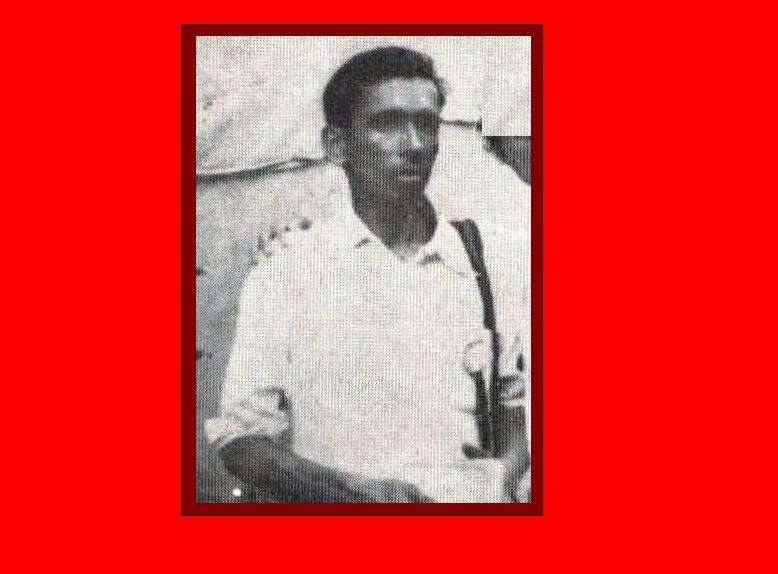
Comrade Gurudas Pal was born in the month of January, 1913 at Badartala area of Metuaburuz in the outskirts of Kolkata. His father Late Monohar Pal used to work in Clive Jute Mill and was a ‘TARJA’ singer as well. Mother Kusumkumari Debi had a great influence on Gurudas who was the third son among the four sons and three daughters of Monohar & Kusumkumari. Mother Kusumkumari was a leader of the local Mahila Samity (Women’s Organisation). Kusumkumari, before joining the Communist Party of India, actively participated in the anti-British movement. During the period 1948-51 when Communist Party of India was banned, many secret meetings were held in their house. Many leaders and workers of the party used to take shelter there, too. Gurudas could read only upto the secondary level. He read in the local Kailash Free Primary School and then a for few years in the High School of Metiaburuz. His ‘TARJA’ singer father and political actvitist mother both had great influence on Gurudas. Gurudas used to run a small tea, biri, betel shop near Akra Fatak at Metiaburuz for his living. He did not marry. Poverty was his life-long companion. 


Still when Salil Chowdhury invited him to Mumbai, he refused because he did not want to leave his native place. As a performer Gurudas was unparallel with his own unique style of singing. In the year 1951 in the film “BARJAATRI” Gurudas sang the song ‘ Punti Maachh Daangaay Uthe Fut Kaate’ in his own voice. He was a member of the Communist Party of India since 1939. In all probability Gurudas was arrested twice when the Communist Party of India was banned. He was among the 125 wounded when the Congress Police fired upon a procession demanding unconditional release of the political prisoners in December, 1949. Gurudas breathed his last in Beleghata I D Hospital on 13.12.1968 after a severe attack of Meningitis in his shop at Akra Fatak. 


We shall now pay our tribute to this great Composer and Singer of the Indian Peoples` Theatre.

Ebaar Egiye Chalo Bhaai:


Din Jaay Go:


Baba Re O Baba Re:


Mathaa Thaandaa Kar:


Saturday, August 4, 2012

Jyotirindra Moitra - our centenary tributes

We shall continue our journey of "Nabajibaner Gaan" with a few more songs.

(1) & (2) "Taanter Taalite" & "Eso Haat Laagaai" :


(3) More Jete Debo Naa :


(4) Oi Bujhi Prabhaater :


(5) & (6) "Sunechhi Sunechhi" & "Noy Eto Chhalanaa" :


(7) Asajhyo Asajhyo :


And we end this journey of Nabajibaner Gaan by these songs sung by Debabrata Biswas:

Saturday, July 28, 2012

Eso Mukto Karo

In this section we bow before another legend Jyotirmay Moitra. We are passing through the centenary year of this master composer and lyricist.


We will now listen to some selected songs from his famous Dance Drama "Nabajibaner Gaan" : -

1) Na Na Na :


2) Themo Naa Themo Naa:


3) Daamaa Bejechhe:


4) Mukti Raner Saathi:


5) Pathe Pathe Shanka :


6) Hingshaa Henechhe                                         &                                          7) Aamraa Je Soinik :


8) Heion Ho Heion Ho                                           &                                          9) Saari Saari Nouka :


10) Ki Kore Firaabo Taader:

Hemanga Biswas - Centenary Tributes

As our centenary tributes to Comrade Hemanga Biswas we will now present three more songs, which are unique in some way or other.

1) It is well known that Salil Chowdhury composed "Sei Meye" as a sequel to Rabindranath`s "Krishnakali".  Perhaps, most of us have listened the song in Suchitra Mitra`s voice which has become very popular. Hemanga Biswas also composed one sequel to "Krishnakali". Here Dohar sings Kabiguru's "Krishnakali" followed by Hemanga's "Surer Guru". -


2) "Habiganjer Jaalaali Koitor" may not be a "Ganasangeet" in the true sense of the term. But we still like to include the song as here Hemanga Biswas tells us about himself in is own special way and tune:


3) "Dhakar Daak" - sung by Kali Dasgupta. The song was composed in 1952 on Language Movement. However, Hemanga was directly inspired by a similar ballad styled song that he heard at Netrakona Peasant Conference of 1943 from two village sufi poets/singers

Friday, July 27, 2012

Centenary Tributes to Hemanga Biswas - with a bouquet of his songs

A few more unforgettable songs of Comrade Hemanga Biswas is presented here as our centenary tributes to him.

Firstly, the famous song "Sankhachil" :-


Now, that song 'Khubdho Ishaani Jhare` from "Kallol" which once shook West Bengal : -


Another masterpiece - John Henry : -


Let's once again listen to the original by Harry Belafonte: -


Who can ever forget "Mountbaton Mangalkabyo"? -


Or, "Rush Desher Comrade Lenin" ? -


Friday, May 25, 2012

Debabrata Biswas - Robeson of Bengal - Centenary Tributes


Debabrata Biswas or Geroge Biswas was undoubtedly one of the best and most popular singers of Rabindrasangeet. A confirmed communist throughout his life, he held his party membership with the Communist Party of India till the mid 1950s. Apart from Rabindrasangeet, he is known to have held the masses spellbound with his booming and baritone voice singing Ganasangeet or Peoples' Songs in party gatherings, meetings and plenary sessions up to the mid-1950s. He remains one of the towering personalities of the golden era of Indian People Theatre Association (IPTA) as a cultural delegate of which he visited China twice in the early 1950s with other great cultural luminaries from India.

This great personality was born on 22nd August, 2011 in Kishoregunj of Mymensing District of today’s Bangladesh. We are now passing the birth centenary year of Debabrata Biswas. We bow to him with a bouquet of three of his Ganasangeets - all composed by another master composer Salil Chowdhury.

(1) Pathe Ebaar Naamo Saathi:


(2) O Aalor Pathajaatri


(3) Aamaar Pratibaader Bhaashaa:

Thursday, May 24, 2012

Nibaran Pandit - We will not forget you, Comrade.

In the opinion of some people, total number of songs composed by Nibaran Pandit is almost 300. We have already posted 11 of them. Four more are posted now.

Gramer Maanush:


Hari Tomaar Apaar Leelaa:


Maa Bon O:


Tashaar Kabitaa:


We, therefore, could produce only 15 of them. If possible we promise to come back with some more. Nibaran Pandit has worked with more than 20 types of folk tunes of Bengal like Jari, Sari, Bhaoaiya, Chatka, Punthipara, Keertan etc. Interested people may read “JANAJUDDHER GAAN” – a collection of songs/proses composed by Nibaran Pandit (Edited by: Santimay Guha & Published by: Gananatya Prakashani, 13/1, Creek Lane, Kolkata – 700 014)


Nibaran at his
young age


Another Red Salute to Nibaran Pandit. We will not forget you comrade. We cannot forget you.

Saturday, May 12, 2012

Red Salute to the Master Geedal - Nibaran Pandit

Nibaran Pandit was born on 27th February, 1912 at Sagara village of Kishorganj Sub-division  in Mymensingh District of Bangladesh. He lost his father Bhagaban Chandra Pandit when Nibaran was only ten.  Nibaran, as a result, could read only upto class seven in Kishorganj Ramananda High School and thereafter had join a Biri manufacturing factory to earn a living for him and his family. Nibaran grew up in the atomosphere of folk song. His mother was a good singer. Gradually he became associated with the Communist Party of India and the IPTA. Nibaran Pandit earned state-wide fame when his poem "Janajuddher Daak" was published in the 1st July, 1942 issue of the paper "Janajuddha". He attended the 1st congress of the Communist Party of India as well as the 1st conference of the IPTA both in Mumbai in the month of May, 1943. He got acquainted with the stalwarts of the then Indian theatre film and music.  Nibaran Pandit came back a changed person altogether, full of energy, confidence and a detemined political will. After the partition of 1947 Nibaran stayed back in East Pakistan. But inhuman torture at the hands of the League Police there forced him to come back to India in the month of December, 1950. Nibaran with his family started to stay at Alipurduar in North Bengal. Subsequently he built his own house at Dauaguri village in the outskirts of the town. He agian started manufacturing Biri. In 1978 he fought the Paychayet election from Dauaguri village in a CPI-M ticket and won. Nibaran was associated with the Communist Party of India (Marxist) till his death. He was given honorary membership of the IPTA in the year 1978. On 1st November, 1984 Nibaran Pandit breathed his last.


We salute this great poet, composer and singer on his Birth Centenary year. Some of his compositions are presented here -  

Ayksaathe Chal Garbo Mora -


Peter Katha Keu To Bole Na -


Thakio Saabdhaane -


Aamaar Maanjur Maaye -


 Daradi Mor Bhaai -


Haajang Bidroher Gaan -


Baabuder Nabyo Baabuanaa -


Sunen Re Bhai Samaachaar -


Mukhyu Geedaal Haamraa -


Aare O Deshabasi -


Baabui Khedaar Gaan -


Tuesday, January 3, 2012

Three More Masterpieces from Comrade Hemanga Biswas

(1) Aami Je Dekhechhi Sei Desh

In all probability this song was composed by Comrade Hemanga Biswas in the 70s, maybe after his 2nd visit to China. An outstanding composition of Comrade Biswas.


(2) Aaro Basanta Bohu Basanta Aasuk

“Aaro Basanta Bohu Basanta Aasuk” was composed by Comrade Hemanga Biswas on the eve of 70th Birth Anniversary of Com. Mao Ze Dong. Comrade Mao’s birthday is 26-12-1893. Therefore it seems this song was composed during 1963-64. This song is rendered by Smt. Purabi Mukhopadhyay.


(3) Aajaadi Hoy Ni Tor

This song was composed by Comrade Hemanga Biswas probably in the year 1951-52 i.e. in the golden era of IPTA. At that time he was living underground somewhere at Jayantia Hills (Meghalaya of today). The place had a musical history. Com Biswas heard a beautiful song when he was at Com Pravat Pal’s (one of his friends of IPTA) house. The song was about the singer discovering a beautiful flower called ‘THANIUM’ in a foreign country. The beautiful tune attracted Com Biswas and he composed “Aajaadi Hoino Tor” based on that tune.

Sunday, December 18, 2011

Urr_Tang_Tang - Another song by Hemanga Biswas

British East India Company acquired the right to collect tax on behalf of the emperor in 1765. The British colonialists pursued a formidable tax income, introduced a new land tenure regime through the Permanent Settlement Act and also invited moneylenders, merchants into the region as well as employ tax collectors from Greater Bengal to act as intermediaries. Many of them ruthlessly exploited the Adibashi population by a mounting tax load which made many Adibashis trapped to the Zaminders and money lenders. Thus trapped the simple Adibashis resorted to further debts. Many Adibashis were evicted or forced as a result of such unending debt trap and trickery to give up their ancestral lands and forests. The historic Santal Hool rebellion took place during 1855-1857 led by Santal-brothers Sidhu and Kanhu against the British government to protest such excessive land rents and forced dislocation of Santals and other Adivasis from their ancestral lands. This song is composed by Comrade Hemanga Biswas as a tribute to the historic Hool Bidroho. Some confusion about the date. While Com. Biswas has stated the date to be 20th August in his narrative, according to some history books the date is 30th June.

Wednesday, November 9, 2011

Long Live Comrade Bhupen Hazarika

We have lost Comrade Bhupen Hazarika on 5th November, 2011 but his songs will remain immortal. This section of the blog is dedicated to him.

Here Com Hazarika sings "Aamraa Karbo Jay":


We Are In The Same Boat Brother

First, the original english song by Huddie William Ledbetter (Lead Belly):


Now Bhupen Hazarika sings the same song:


And, now the Bengali version:


*******************************************************************************

The Lyric:

We're in the Same Boat Brother

By Huddie “LeadBelly” Ledbetter


We’re in the same boat brother,
And if you shake one end,
You gonna rock the other
It’s the same boat brother

The Lord looked down from his holy place
Said Lawd duh me, what a sea of space
What a spot to launch the human race
So he built him a boat for a mixed-up crew,
With eyes of Black and Brown and Blue.
S that’s how’s come that you and I
Got just one world and just one sky.

We’re in the same boat brother,
And if you shake one end,
You gonna rock the other
It’s the same boat brother

Through storm and grief,
Hit many a rock and many a reef,
What keep them going was a great belief.
That the human race was a special freight
So they had to learn to navigate.
If they didn’t want to be in Jonah’s shoes,
Better be mated on this here cruise.—Why—

We’re in the same boat brother,
And if you shake one end,
You gonna rock the other
It’s the same boat brother

So the boiler blew, somewhere in Spain,
All the kettle was smashed and 40 cranes.
Steam boat out from the Oregon Main.
Oh, it took some time for the crew to learn
What is bad for the bow ain’t good for the stern.
If a fire took place in China today
Pearl Harbor just gonna blaze away.

We’re in the same boat brother,
And if you shake one end,
You gonna rock the other
It’s the same boat brother.
*******************************************************************************

Maanush Maanusher Janye:


The Assamese Translation:

Wednesday, September 21, 2011

Hemanga Biswas again

This song was composed by Hemanga Biswas in the year 1944 on the eve of a students' uprise in Assam. It is a sin to forget this master-piece.

The song is "Mashaal Jwaalo Mashaal Jwaalo" :

Sunday, September 18, 2011

Where Have All The Flowers Gone

One More Song "Where Have All The Flowers Gone" by Pete Seeger followed by its Bengali translation by Hemanga Biswas - "Fulguli Kothaay Gyalo"

First, the Song by Pete Seeger


Now, the Bengali translation by Hemanga Biswas

We Shall Overcome - The evergreen song of the fighting mass

And now that song which is ever-green.

We shall overcome

=========================================================================
The Background of the Song

"We Shall Overcome" is a protest song that became a key anthem of the African-American Civil Rights Movement (1955–1968). The lyrics of the song are derived from the refrain of a gospel song by Charles Albert Tindley. The song was published in 1947 as "We Will Overcome" in the People's Songs Bulletin (a publication of People's Songs, an organization of which Pete Seeger was the director and guiding spirit).

=========================================================================

Firstly by Pete Seeger:


And now the Bengali Translation by Hemanga Biswas
i.e. Aamra Karbo Jay:

Songs on John Brown

Here two more songs. One the original english song "John Brown's Body" by Pete Seeger and side by side the Bengali version made by Hemanga Biswas - "John Brown-er Deho".

Firstly the song by Pete Seeger:


And now the one by Hemanga Biswas: